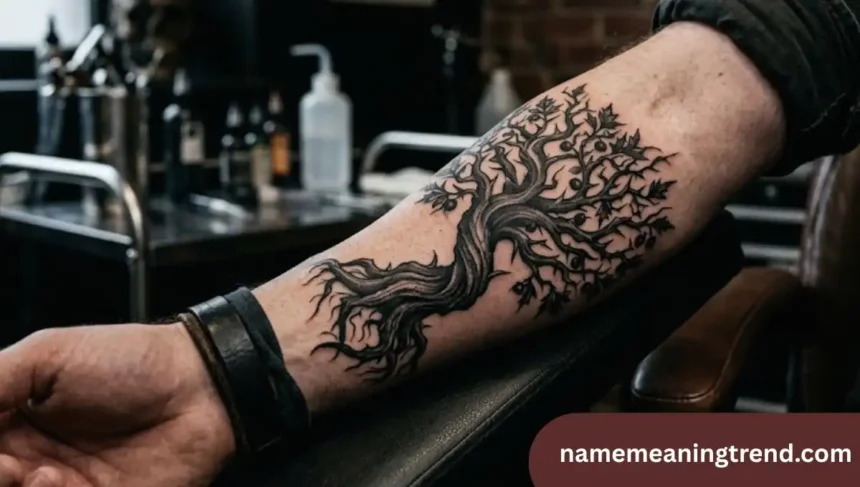
Poison tree tattoos carry deep symbolic meaning rooted in emotion, literature, and personal transformation. Often associated with suppressed anger and the consequences of hidden feelings, this design reflects how negativity can grow when left unaddressed. Inspired largely by William Blake’s A Poison Tree but also connected to older myths and symbolic traditions, the poison tree has evolved into a powerful modern tattoo choice. Whether used to represent inner conflict, personal growth, or emotional awareness, it remains a striking and meaningful design.
- What Is a Poison Tree Tattoo?
- Core Symbolism at a Glance
- Literary Origins: William Blake’s Poison Tree
- Older Symbolic Roots of Poisoned Trees
- Pre-Modern Symbol Patterns
- Common American Interpretations
- Emotional Signals the Tattoo Sends
- Cross-Cultural Interpretations
- Popular Design Styles and Variations
- How the Meaning Has Shifted Over Time
- Poison Tree Tattoo Meaning by Context
- The Origins of the Poison Tree Symbol
- Core Symbolism of Poison Tree Tattoos
- Common Design Elements
- Cultural and Literary Influences
- Personal Meanings and Stories
- Psychological and Emotional Interpretation
- Tattoo Styles for Poison Tree Designs
- Placement and Size Considerations
- How to Choose the Right Poison Tree Tattoo
- Tattoo Care and Longevity
- Common Design Elements
- Cultural and Literary Influences
- Tattoo Styles for Poison Tree Designs
- Placement and Size Considerations
- How to Choose the Right Poison Tree Tattoo
- Tattoo Care and Longevity
- FAQs
- Is a poison tree tattoo always negative?
- Does it have religious meaning?
- Is it based only on William Blake?
- Can it represent healing?
- Is the poison tree tattoo controversial?
- Does placement change the meaning?
- Conclusion
- YOU MY ALSO READ
Quick Answer
A poison tree tattoo symbolizes hidden anger, suppressed emotions, betrayal, and the consequences of unresolved negativity. It often reflects how toxic thoughts or grudges can grow into something destructive over time poison tree tattoo meaning.
TL;DR
- Represents bottled-up anger and emotional toxicity
- Inspired by William Blake’s poem A Poison Tree
- Symbolizes consequences of silence and resentment
- Can also mean personal growth through confronting darkness
- Popular in dark, gothic, or symbolic tattoo styles
What Is a Poison Tree Tattoo?
A poison tree tattoo is a symbolic design featuring a tree associated with danger, toxicity, or corruption. Unlike natural or life-giving tree tattoos, this design emphasizes darker themes—emotional decay, secrecy, and inner conflict.
Common Visual Elements
- Twisted or leafless branches
- Dark, withered bark
- Poisonous fruit (often apples)
- Snakes, skulls, or shadowy figures
- Roots spreading aggressively or unnaturally
Core Symbolism at a Glance
Main Symbolic Themes
- Suppressed anger: Emotions left unspoken that grow over time
- Betrayal: Trust broken and internalized resentment
- Consequences: Harm caused by nurturing negative feelings
- Inner darkness: Hidden parts of the self
- Transformation: Recognizing and confronting toxic patterns
Literary Origins: William Blake’s Poison Tree
The Poem’s Core Message
The tattoo draws heavily from William Blake’s poem A Poison Tree, where anger that is not expressed openly grows into a deadly force. The poem illustrates how nurturing resentment leads to destructive outcomes, often harming both oneself and others.
Older Symbolic Roots of Poisoned Trees
Pre-Modern Symbol Patterns
Before Blake, trees associated with poison or corruption appeared in myths and folklore. They often symbolized:
- Forbidden knowledge
- Moral decay
- Death or spiritual danger
- The dual nature of growth (life vs. destruction)
These early meanings reinforce the idea that not all growth is positive—some can be harmful.
Common American Interpretations
In modern American tattoo culture, poison tree tattoos are often seen as:
- A reminder to address emotions instead of suppressing them
- A symbol of past betrayal or toxic relationships
- A mark of personal awareness and emotional maturity
- An aesthetic expression of darker, introspective themes
Emotional Signals the Tattoo Sends
- “I’ve experienced betrayal or emotional pain”
- “I understand the danger of holding grudges”
- “I’ve grown from toxic patterns”
- “I embrace both light and dark aspects of myself”
Psychologically, it often reflects self-awareness and emotional depth rather than negativity alone.
Cross-Cultural Interpretations
- Western symbolism: Sin, temptation, and moral consequences
- Eastern perspectives: Imbalance, negative energy, or karmic buildup
- Spiritual view: A warning against internal corruption and unresolved emotions
Across cultures, the core idea remains consistent—unchecked negativity leads to harm.
Popular Design Styles and Variations
- Gothic style: Dark shading, eerie atmosphere, dramatic contrast
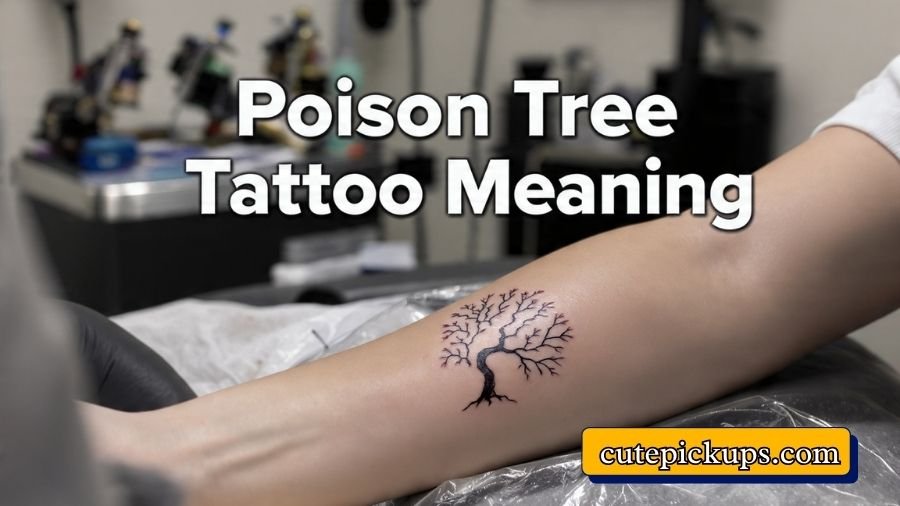
- Minimalist linework: Simple tree outlines with subtle symbolism
- Realistic blackwork: Detailed bark textures and lifelike decay
- Surreal designs: Abstract trees blending with faces or shadows
-
Common Tattoo Styles
- Blackwork: Heavy black ink emphasizing decay, shadow, and intensity
- Neo-traditional: Bold lines with symbolic elements like fruit or snakes
- Illustrative: Story-driven designs inspired by Blake’s poem
- Fine line: Minimal detail focusing on subtle symbolism
- Surrealism: Dreamlike imagery blending trees with human or abstract formsLiterary tattoos: Incorporating lines or references from Blake’s poem
Design Choices and Their Effects
- Black and grey: Emphasizes darkness, grief, or introspection
- Red accents: Suggest anger, danger, or emotional intensity
- Green tones: Can soften meaning, hinting at growth or balance
- Placement on chest: Deep emotional or personal significance
- Forearm or hand: Visible reminder or statement piece
- Back or spine: Hidden struggles or internal battles
- Added symbols:
- Apples: temptation or consequences
- Snakes: deceit or hidden danger
- Skulls: mortality and final outcomes
- Roots: deep-seated issues or past trauma
Where You’ll See It Today
- Tattoo culture focused on mental health awareness
- Literature-inspired tattoo communities
- Social media platforms showcasing symbolic ink
- Alternative and gothic fashion scenes
- Personal storytelling tattoos representing emotional journeys
Frequent Misreadings
- Seen as purely “evil” or negative when it often reflects self-awareness
- Confused with general tree tattoos that symbolize life or growth
- Misinterpreted as promoting anger rather than warning against it
- Overly linked to one poem, ignoring broader symbolic roots
How the Meaning Has Shifted Over Time
Timeline of Meaning Changes
- Pre-modern era: Symbol of danger, forbidden knowledge, and decay
- 18th–19th century: Literary meaning shaped by William Blake’s poem
- 20th century: Less common, mostly literary or artistic reference
- Modern era: Personal symbolism tied to psychology, trauma, and growth
Poison Tree Tattoo Meaning by Context
The meaning of a poison tree tattoo depends heavily on personal context:
- After betrayal: Represents lessons learned and emotional boundaries
- Mental health journey: Symbolizes confronting suppressed feelings
- Artistic expression: Appreciation for literature and dark symbolism
- Spiritual context: Warning against inner imbalance or negativity
- Aesthetic choice: Sometimes chosen purely for its dark visual appeal
-
FAQs
Is a poison tree tattoo always negative?
No. While it deals with dark themes, it often represents awareness, growth, and learning from negative experiences rather than negativity itself.
Does it have religious meaning?
It can, especially in Western contexts where it may relate to sin or temptation, but it is not strictly a religious symbol.
Is it based only on William Blake?
No. Blake popularized the concept, but poisoned or dangerous trees appear in older myths and symbolic traditions.
Can it represent healing?
Yes. Many people use it to symbolize overcoming toxic emotions and personal transformation.
Is the poison tree tattoo controversial?
Not widely, but it can be misunderstood due to its dark imagery and themes.
Does placement change the meaning?
Placement can influence interpretation—visible areas may signal openness about struggles, while hidden placements suggest more private or internal meanings.