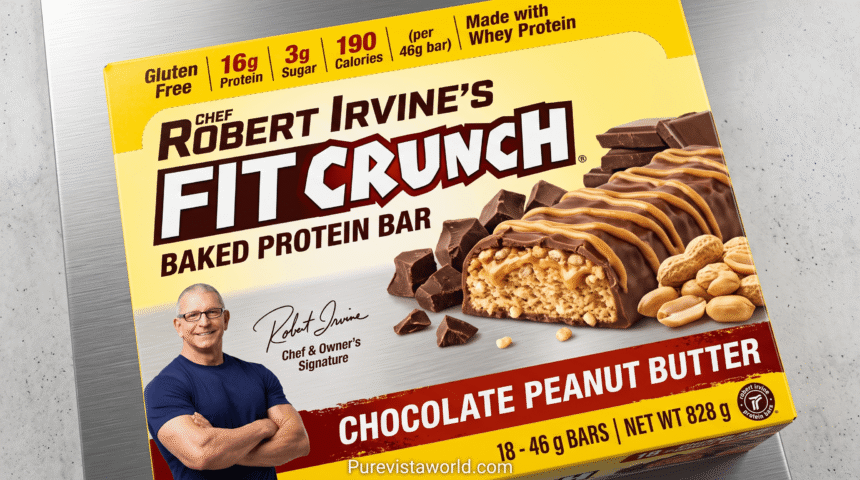
If you’ve searched “Robert Irvine protein bars,” you’re probably trying to figure out what these bars actually are, how much protein and sugar they contain, and whether they’re worth adding to your routine. This guide covers the current FITCRUNCH lineup, its nutrition breakdown, ingredients, and practical buying advice — all based on current product listings and nutrition labels (checked September 2026), since flavors and formulations do change over time.
What Are Robert Irvine’s Protein Bars?
FITCRUNCH is the protein bar brand created by celebrity chef Robert Irvine, produced by his company Pervine Foods. The brand’s signature product is a “baked” protein bar built around a soft cookie-dough-style core, wrapped in layers meant to mimic a candy bar rather than a typical chalky protein bar. Irvine has positioned the bars around taste first, protein content second — the brand’s pitch has always been that most protein bars taste like cardboard, and FITCRUNCH was built to fix that.
The Different Bar Types
FITCRUNCH isn’t a single product — it’s a small lineup, and the differences matter if you’re comparing what you see on a shelf or online.
Baked Bars — The flagship product. These use a six-layer construction: a soft cookie base, a filling (peanut butter, cream, or fruit depending on flavor), whey protein crisps, and a candy-style coating with a drizzle on top. They come in two sizes:
- A snack-size bar (about 46 g / 1.62 oz), the version most commonly sold in multipacks at grocery stores and club stores.
- A full-size bar (about 88 g), which delivers roughly double the protein and calories and is closer to what the brand originally launched with.
Wafer Bars — A lighter, crispier format using wafer layers instead of a baked cookie core. Flavors include Chocolate Peanut Butter and Vanilla Gelato.
Puff n’ Crunchy Bars — A newer addition to the line, sold in flavors like Caramel S’mores, built around a puffed-crisp texture rather than the baked cookie center.
Flavor Lineup
Current and recent FITCRUNCH flavors include Chocolate Peanut Butter, Chocolate Chip Cookie Dough, Peanut Butter & Jelly, Chocolate Coconut Almond, Mint Chocolate Chip, Caramel Peanut, Chocolate Banana, Chocolate Brownie, Cookies & Cream, Cinnamon Twist, and limited or seasonal runs like Strawberry Strudel and Birthday Cake. Availability rotates, and not every flavor is stocked at every retailer, so check the retailer’s current listing rather than assuming a specific flavor is in stock.
Nutrition Facts: What to Actually Expect
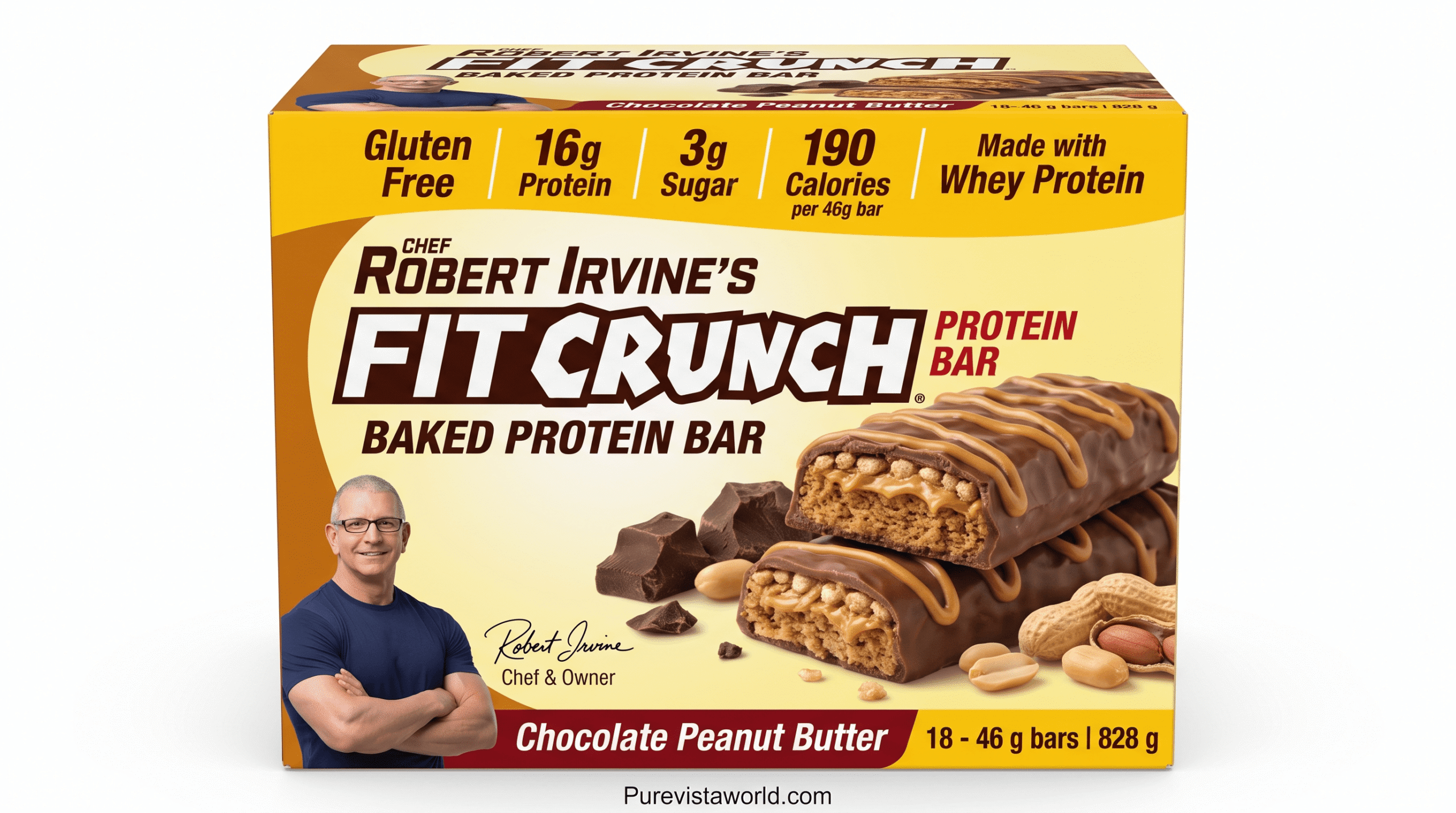
Because bar size varies, nutrition numbers vary too. Here’s what a standard snack-size Chocolate Peanut Butter Baked Bar (46 g / 1.62 oz) looks like on the label:
- Calories: 190
- Protein: 16 g
- Total Fat: 8 g (4 g saturated)
- Total Carbohydrates: 14 g
- Fiber: 1 g
- Total Sugar: 3 g (2 g added sugar)
- Sodium: 200 mg
The Wafer Bar version runs closer to 240 calories with a similar 16 g of protein, but more fat and less sodium. The original full-size bar (88 g) roughly doubles these numbers, landing near 400 calories and up to 30 g of protein per bar, depending on flavor.
Exact numbers vary by flavor and package, so always check the label on the specific product and size you’re buying rather than assuming all FITCRUNCH bars match one number.
What’s Inside: Ingredients Worth Knowing
FITCRUNCH bars are built on a blend of whey protein isolate and whey protein concentrate, often combined with soy protein isolate. The low sugar count is achieved partly through sugar alcohols like maltitol and sorbitol, along with sucralose and stevia extract as sweeteners — this is standard practice for “low sugar” protein bars, but it’s worth knowing before eating several in a day, since sugar alcohols can cause digestive discomfort in some people when consumed in quantity.
Common allergens: Most FITCRUNCH bars contain milk, soy, and peanuts, and many are made in facilities that also process wheat, tree nuts, and egg. The Baked Bars are labeled gluten-free; the Wafer Bars are not, since they use wheat-based wafers. If you have a wheat or gluten sensitivity, check the specific product line, not just the brand.
Benefits and Limitations
Where these bars fit well: as a portable protein top-up between meals, a post-workout snack when a full meal isn’t practical, or a satisfying alternative to a candy bar that still delivers 16–30 g of protein. The taste and texture are genuinely closer to a dessert bar than most competitors in this category.
Where to be cautious: these are calorie-dense and not designed as a low-calorie snack, particularly the full-size bar. They’re also not a whole-food source of protein — fine as a supplement to a diet, less ideal as a routine replacement for real meals. And “low sugar” doesn’t mean sugar-free; check the added sugar line if you’re tracking it closely.
How FITCRUNCH Compares to Other Protein Bars
Compared to fibrous, dense protein bars (like many meal-replacement or “clean label” bars), FITCRUNCH prioritizes taste and texture, which comes with a tradeoff: more saturated fat and sugar alcohols, and less fiber. If your priority is minimal ingredients or high fiber, FITCRUNCH likely isn’t the closest match. If your priority is a protein bar that actually tastes like a treat, it’s built for that specifically.
Common Mistakes to Avoid
- Assuming all FITCRUNCH bars have the same protein count. Snack-size and full-size bars differ significantly — always check the label.
- Eating several bars back-to-back. The sugar alcohol content can cause GI discomfort in larger quantities.
- Treating them as a meal replacement. They’re a snack supplement, not a substitute for balanced whole-food meals.
Frequently Asked Questions
How much protein is in a Robert Irvine FITCRUNCH bar?
It depends on size: snack-size Baked Bars typically have 16 g, while the full-size bar has closer to 30 g per bar.
Are FITCRUNCH bars gluten-free?
The Baked Bars line is labeled gluten-free. The Wafer Bars are not, since they contain wheat-based wafers.
Are Robert Irvine’s protein bars healthy?
They can fit into a balanced diet as a protein-rich snack, but they’re calorie-dense and sweetened partly with sugar alcohols, so they’re better suited as an occasional snack than a daily staple.
Where can I buy FITCRUNCH bars?
They’re widely available at major grocery chains, club stores, and online retailers. Flavor and size availability varies by location.
Bottom Line
Robert Irvine’s FITCRUNCH bars are built around making protein bars taste like an actual treat, and the nutrition label backs that up: solid protein, low sugar for the category, but more saturated fat and sugar alcohols than a “clean” protein bar. They’re a reasonable snack or protein top-up — just check the size and flavor label before you buy, since the numbers shift more than most shoppers expect.